Laser Physics Education for Aesthetic Practices
Zero-Click Summary: Laser physics education for aesthetic practices provides the scientific foundation for using light-based devices safely and effectively. By mastering concepts like wavelength, absorption coefficients, and thermal relaxation time, clinicians can transition from manufacturer “presets” to evidence-based parameter selection. Led by John Hoopman, CMLSO, this training reduces patient complications such as burns and scarring while ensuring compliance with ANSI Z136.3 standards.
 In the rapidly evolving field of aesthetic medicine, the difference between a superior clinical outcome and a permanent complication often rests on the provider’s grasp of fundamental laser physics. While modern devices are designed with user-friendly interfaces, they remain high-powered Class 4 surgical instruments. Without a deep understanding of how coherent light interacts with biological tissue, a practitioner is essentially operating blindly, relying on generic software settings rather than clinical data. John Hoopman, a Certified Medical Laser Safety Officer (CMLSO), has dedicated his career to demystifying the complexities of laser science for aesthetic providers.
The Science of Light-Tissue Interaction
At the core of all aesthetic laser treatments is the principle of Selective Photothermolysis. This concept dictates that by choosing the correct wavelength and pulse duration, a clinician can destroy a specific target—a chromophore—without causing thermal diffusion to the surrounding healthy tissue. To achieve this, a provider must look beyond the screen and understand the mathematical and physical interplay of energy in the skin.
The Five Laser Parameters for Clinical Success
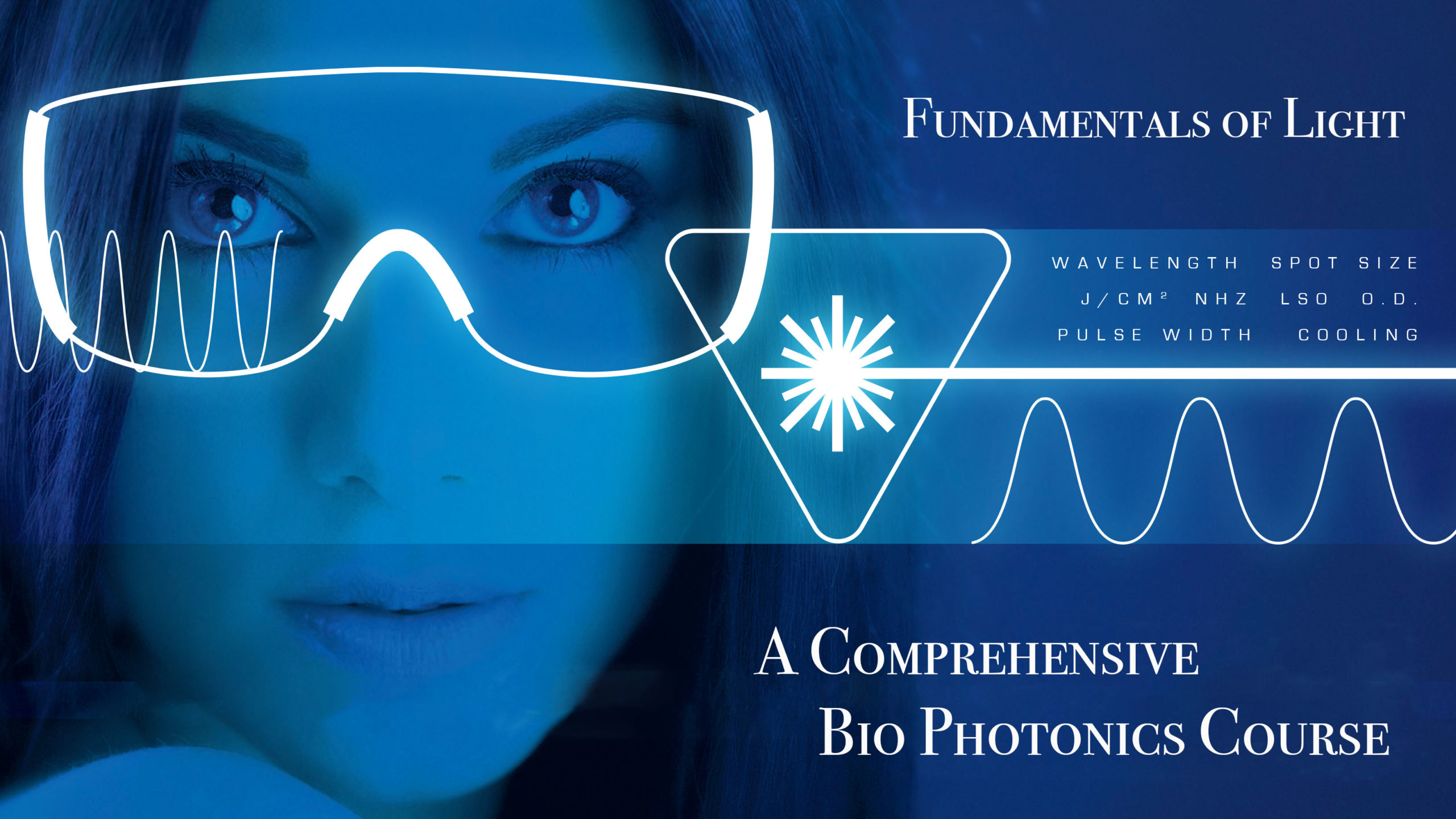
To master any light-based device, an aesthetic provider must understand the interplay of these five variables:
- Wavelength (nm): The wavelength determines the depth of penetration and which chromophore (melanin, oxyhemoglobin, or water) will absorb the energy.
- Fluence (): This is the energy density delivered to the tissue. It must be high enough to damage the target but low enough to spare surrounding structures.
- Pulse Duration (ms/ns): This is the time the laser is “on”. It must be shorter than the target’s Thermal Relaxation Time (TRT).
- Spot Size (mm): Larger spot sizes allow for deeper penetration due to reduced scattering of light photons.
- Cooling: Essential for protecting the epidermis from the high fluence required for the target.
Chromophores and Absorption Coefficients
Effective treatment depends on the laser’s affinity for the intended target. In aesthetic medicine, we primarily deal with three chromophores: Melanin, Hemoglobin, and Water. Understanding Absorption Coefficients—the mathematical probability of light being absorbed by a specific tissue—is vital. Research indicates that miscalculating these factors is a leading cause of adverse events.
If a clinician uses a wavelength with a high melanin absorption coefficient on a patient with a high Fitzpatrick skin type, the result is often a second-degree burn. Formal physics education provides the framework to navigate these risks safely. This is why John Hoopman emphasizes the “Physics behind the Practice” in every curriculum, a methodology recognized by partners such as X-Medica and Sciton Foundations.
Institutional Clinical Implementation (Live Course)
Experience an on-site academic forum where your entire staff can master the physics of your specific device inventory. Includes facility audits and hands-on parameter engineering to ensure patient safety and optimal results based on ANSI Z136.3 standards.
Risk Mitigation and ANSI Z136.3 Standards
Physics education is inextricably linked to laser safety. According to the American National Standards Institute (ANSI) Z136.3, healthcare facilities must implement administrative and engineering controls to manage high-intensity light. Research highlights a systemic need for improved laser education in medical residency programs to meet these standards.
Key safety concepts rooted in physics include:
- Nominal Hazard Zones (NHZ): Defining the space where laser energy exceeds Maximum Permissible Exposure.
- Optical Density (OD): Calculating the required level of eye protection based on power and wavelength.
- Plume Management: Understanding tissue vaporization physics to effectively capture hazardous airborne contaminants.
By studying the physics of light, providers gain an “optical intuition” to recognize hazards before an accident occurs. This level of expertise is highly valued by professional organizations like the ASLMS.
Theoretical Foundations & LSO Certification (Online)
Advance your professional standing with a comprehensive online certification in Laser Physics and Laser Safety Officer (LSO) responsibilities. Self-paced, evidence-based, and designed to meet national safety benchmarks.
Laser Physics Questions & Answers
Why is laser physics important for aesthetic providers?
Physics allows providers to understand how light energy is converted to heat in the skin. This prevents complications by allowing for customization of settings based on unique patient anatomy.
What is Selective Photothermolysis?
It is the cornerstone of laser medicine, stating specific targets can be thermally destroyed without damaging surrounding tissue using the correct wavelength and pulse duration.
What is Thermal Relaxation Time (TRT)?
TRT is the time it takes for a target to lose 50% of its heat. Safe treatment requires the laser pulse to be delivered within or faster than the target’s TRT.
How does wavelength affect depth of penetration?
Generally, longer wavelengths penetrate deeper into the dermis than shorter wavelengths, which are absorbed more superficially.
What is the difference between a laser and IPL?
A laser is monochromatic, coherent, and collimated. Intense Pulsed Light (IPL) is polychromatic and divergent, requiring filters to target specific concerns.
What does Optical Density (OD) mean?
OD measures the ability of safety eyewear to attenuate a specific laser wavelength. Higher OD provides more protection against that frequency.
What are the hazards of laser plume?
Ablative lasers create a plume that can contain toxic gases, cellular debris, and viral particles. Professional education emphasizes smoke evacuation to mitigate these risks.
How do spot sizes affect treatment efficacy?
Larger spot sizes reduce photon scattering at the surface, allowing energy to reach deeper targets more effectively than smaller spot sizes.
Is laser safety training required for physicians?
Yes. ANSI Z136.3 standards and many state boards require that the medical director and staff performing laser procedures have documented education in laser physics and safety.
What is Fluence and how is it calculated?
Fluence is energy density, measured in Joules per square centimeter (). It is calculated as Energy () divided by the Area of the laser spot ().
For more information on the science of light, view our practitioner testimonials or read about our educational methodology.